
Inflection Points:
Critical turning points that define our lives.

Disclaimer: " Take a seat, grab a cup of berry blast or your preferred beverage, because this article may feel longer than any Donald Trump's speech. But fear not😂! While the historical references may rival the length of the Great Wall of China, I promise it's worth the journey. So stick around, because as they say, all roads lead to wisdom (and hopefully, a chuckle or two).
"From the simple act of striking two stones together, a spark ignited—a spark that would illuminate the path of human history. Though the name of the first caveman to witness this phenomenon eludes us, the impact of their discovery reverberates through the ages. The birth of fire marked the first inflection point in our journey as a species, a pivotal moment that shaped the course of civilization.
Consider the profound implications: without fire, the story of humanity would be vastly different. No cooking to tame the raw elements of nature, no warmth to stave off the chill of the night. In essence, fire served as the catalyst for innovation, enabling us to conquer the challenges of our environment and forge the foundations of society.
Indeed, the significance of this discovery rivals that of scientific breakthroughs like Einstein's theory of relativity or the artistic brilliance of Da Vinci and Michelangelo during the Renaissance. Just as Marxism fueled the flames of World War II, these events—both monumental and mundane—have left an indelible mark on the tapestry of human history.
Inflection Points
When we talk about inflection points, nothing slaps better than the mathematical explanation. To explain inflection points from a mathematical perspective, they are points on a curve where the direction changes, either going up or down
.
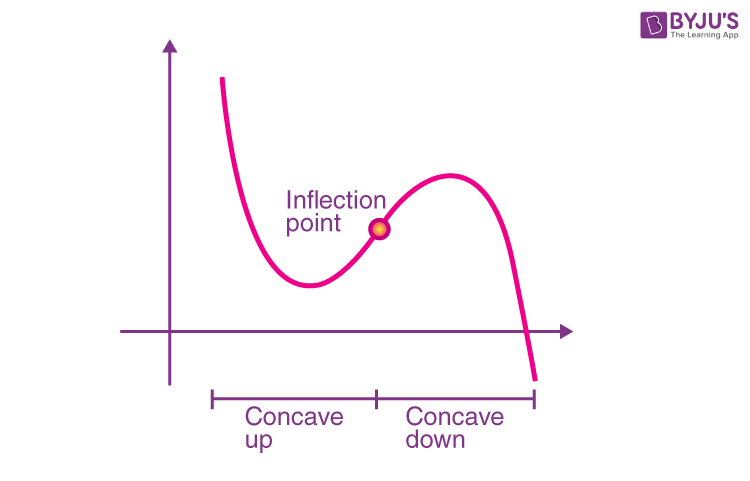
Similarly, in life, inflection points are significant events that influence our future paths. They can be major milestones like your first heartbreak 💔 or small moments like trying your first meal in a new country. While some events might seem insignificant like deciding to take a walk as opposed to taking a cab or might be very monumental like moving out of your parent’s house, these inflexion points are often highlighted by two pillars shown later in this article.
Richelle Mead once said that:
“History is important because it teaches us about the past. And by learning about the past, you come to understand the present, so that you may make educated decisions about the future.
Indeed there is no better way to pass the message hidden in inflection points than by taking a journey through history.
The Echoes of Choices:
History as we know it is full of events where individuals made choices that in turn proved to be significant inflection points, at the moments when these choices were made, said individuals were not aware of the impact their choice would have on our present. Let us look at a few events:
The Rise of the Edo Period in Japan:
For everyone that has seen the Fx series, Shogun, you could immediately tell that the arrival of John Blackthorne into the Japans led to a series of chain of events causing the fabled “Crimson Sky or Kōten ” . As history would have it, if William Adams (Miura Anjin) the first English sailor hadn’t arrived in Japan, Tokugawa Iyeasu would not have had the foreign knowledge and expertise Adams offered, directing the construction of the first Western-style ships in the country
His interaction with Tokugawa led to him being the first Hatamoto and in turn gave Tokugawa the edge needed in the Battle of Sekigahara, allowing him to become one of the great unifiers of Japan and in turn ushering the prosperous Edo period often depicted in media..
The Apple’s graceful fall:
The discovery of gravity by Sir Isaac Newton in the 17th century spurred by the fall of an apple from its resting place forever altered our perception of the universe. Before Newton, prevailing beliefs held sway under Aristotle and Ptolemy's geocentric model. However, Newton's groundbreaking insights, published in his "Mathematical Principles of Natural Philosophy," reshaped our understanding.
Through meticulous observation and mathematical analysis, Newton unveiled his laws of motion and the law of universal gravitation. This revelation not only explained celestial motion but also laid the foundation for classical mechanics, revolutionizing physics and fostering a culture of scientific inquiry. Newton's discovery sparked a scientific revolution, paving the way for advancements in physics, astronomy, and engineering.
The signing of the Treaty of Versailles:
The Treaty of Versailles, signed in 1919 at the end of World War I serves as a great reminder of negative inflection points. While it intended to bring about peace and stability in Europe, the treaty had far-reaching repercussions that contributed to the rise of totalitarian regimes and ultimately led to the outbreak of World War II.
This treaty imposed harsh penalties on Germany, which was held responsible for starting the war. Germany was forced to accept full responsibility for the conflict, pay exorbitant reparations, and cede territory to neighboring countries. The treaty also imposed severe restrictions on Germany's military, limiting its size and prohibiting the development of certain weapons.
These punitive measures fueled resentment and humiliation among the German population, paving the way for the rise of extremist political movements such as the Nazi Party. Adolf Hitler, capitalizing on widespread dissatisfaction with the treaty and the economic hardships that followed, rose to power promising to restore Germany's greatness and overturn the terms of the Treaty of Versailles.
The What-If Scenarios
We have seen the beauty of historical cannon events (thank you Miguel O'Hara for that beautiful name) but I often wonder what the consequences would be like if certain events did not end the way we know it. I believe Marvel’s What If series perfectly encapsulates my thoughts, so I think it’s best that we look at history’s cannon events from a different lens, because speculating on alternative histories can be as enlightening as it is entertaining:
What if Cleopatra and Antony Had Won the Battle of Actium (31 BC)?:
The Battle of Actium was a naval battle fought between the forces of Octavian (later Emperor Augustus) and those of Cleopatra VII of Egypt and her ally, Mark Antony. It took place on September 2, 31 BC, near the city of Actium in Greece. Octavian's fleet decisively defeated the combined forces of Cleopatra and Antony, leading to their eventual suicides and the end of the Ptolemaic dynasty in Egypt. Octavian emerged victorious and became the sole ruler of the Roman Empire, marking the beginning of the Roman Imperial period.
If Cleopatra and Antony had won at Actium, this could have resulted in a divided Roman Empire, with Egypt and Rome under joint rule. This outcome might have led to a fusion of Egyptian and Roman cultures, influencing art, architecture, language, and religion in the Mediterranean world. The balance of power in the ancient world would have shifted, potentially leading to conflicts with other regional powers and altering the trajectory of subsequent empires.
What if the South Had Won the American Civil War (1861-1865)?:
The American Civil War was a conflict fought between the Northern states (Union) and the Southern states (Confederacy) over issues such as slavery, states' rights, and economic differences. The war began in April 1861 when Confederate forces attacked Fort Sumter in South Carolina. Over four years, the Union and Confederate armies engaged in numerous battles across the U.S. The Union emerged victorious, leading to the abolition of slavery, heavily highlighted by the Emancipation Proclamation by Abraham Lincoln serving as a pedestal for the Civil Rights Act of 1964.
However, a Confederate victory in the Civil War would have had profound and lasting consequences for the U.S, and the world. The continuation of slavery in the South could have hindered economic and social progress, leading to continued tensions between North and South. The U.S. might have remained a divided nation, with competing ideologies and economic systems. Internationally, a weakened U.S. could have altered the balance of power, potentially affecting global conflicts and alliances in the 20th century. Moreover, the implications for civil rights and human rights would have been significant, as the struggle for equality and justice would have taken on different forms in a nation still divided by race and ideology.
Inflection Points in Our Lives
These historical examples underscore a profound truth: every decision we make carries the potential to shape the future. Our choices, no matter how small, contribute to the unfolding story of humanity. When we decide to start a blog, launch a podcast, vote in an election, or boycott a product, we are creating ripples that can lead to significant change.
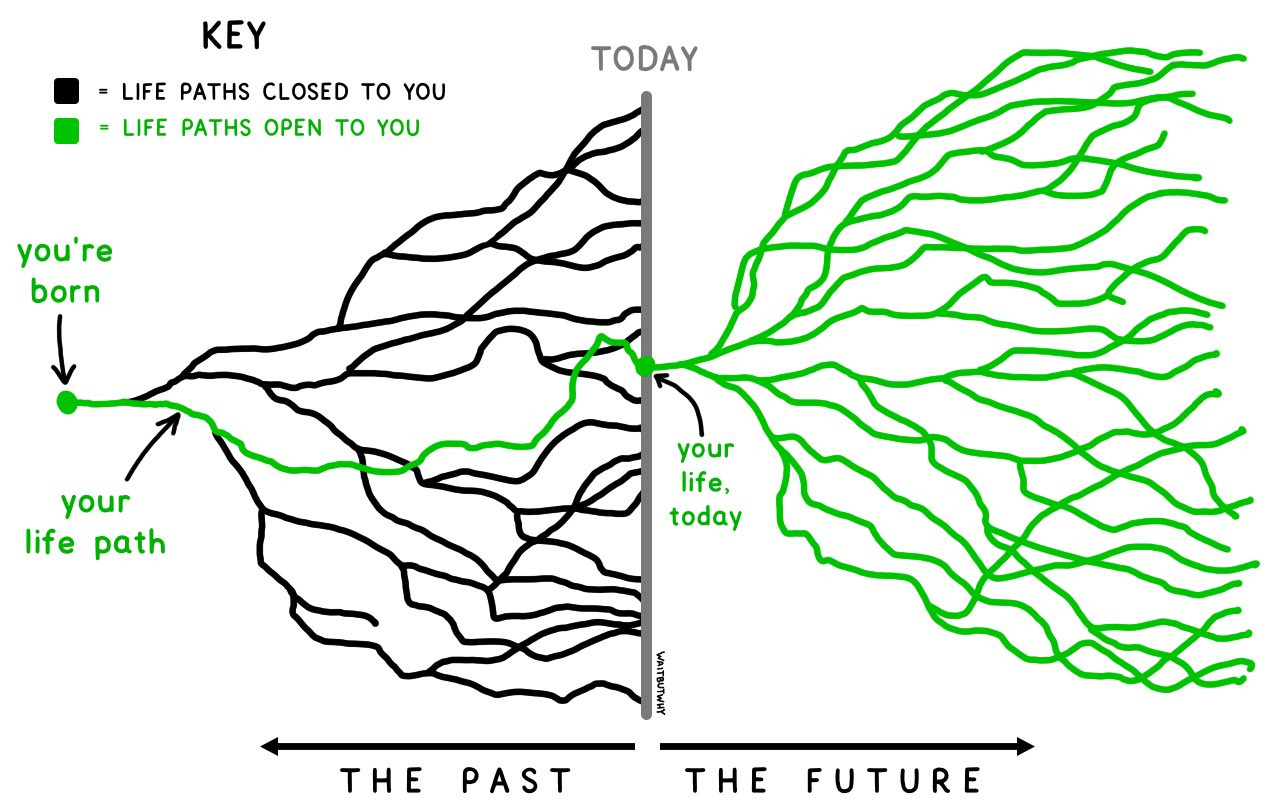
Our present actions are the inflection points of tomorrow's history. The consequences of our choices may not always be immediately apparent, but they are always present. The simple act of voting in Nigeria’s case🌚, for instance, is a collective choice that determines the direction of governance and policy, impacting future generations. Similarly, the decision to innovate or to pursue a new idea can lead to technological advancements that redefine how we live and interact as evident with the creation of Apple or Paystack and Flutterwave.
The Power of the Present
The past offers us a guide, but the future remains an open field, shaped by the decisions we make today. We are the architects of our destiny, wielding the power of choice to create the world we envision. By recognizing the significance of our decisions and acting with intentionality, we can steer the course of history toward a more just, innovative, and prosperous future.
We also must not overlook the influence of prevailing philosophies and schools of thought. Just as the currents of a river guide its course, so too do the prevailing ideologies of an era shape the choices and actions of individuals.
Whether it be the code of Bushido in feudal Japan that emphasized loyalty, honor, and self-discipline among samurai warriors, or the principles of Marxism in the tumult of World War II, or the strong ideals of making the impossible an everyday reality in the current Digital age, these philosophies serve as the compass by which individuals navigate their lives. They inform not only our beliefs and values but also the decisions we make and the paths we choose to tread.
In essence, we are all walking inflection points, and our choices matter. As we navigate the complexities of modern life, let us be mindful of the power we hold. Every choice we make, big or small, is a step in the journey of shaping history. Let us choose wisely, for the future depends on it.
So, as we stand at the crossroads of past and present, let us remember the words of Horace: “carpe diem quam minimum credula postero” which generally translates to “live in the present without worrying about tomorrow”
P.S.: The beauty of inflection points shines brightly from the stories told, and I would love to hear others. Please feel free to share any personal experience of an inflection point and how it has shaped your perception or your approach to life. Don’t forget to like, share and subscribe.
A lovely read!